Services
Home > Services
Services
Contact Info
With extensive expertise in managing spinal disorders, specialized services guarantee that every patient is provided with a tailored treatment strategy. The objective is always to initiate with non-surgical techniques and progress to advanced treatments only when essential.
+91-8527148924
24/7 Support for Your Business
Info File
Disc Herniation/Sciatica
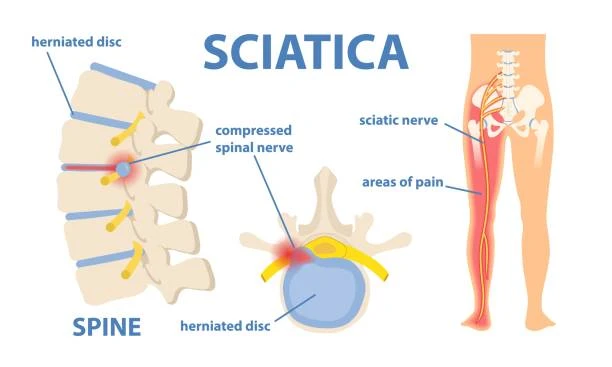
Disc prolapse, often referred to as a slipped disc, ranks among the leading contributors to back pain and sciatica. It occurs when the soft inner core of a spinal disc bulges out through its exterior layer, exerting pressure on adjacent nerves. When this impinges on the sciatic nerve, it results in a condition known as sciatica, which causes discomfort radiating from the lower back down to the legs.
Sciatica is usually marked by sharp, piercing pain, numbness, tingling, or weakness in one leg. The pain may intensify during periods of sitting, bending, or lifting hefty objects. Timely diagnosis and appropriate treatment are crucial to avert the condition from escalating.
Factors Contributing to Disc Prolapse & Sciatica
Disc prolapse may arise from various reasons, including:
- Age-related degeneration (degenerative disc disease)
- Sudden trauma or heavy lifting
- Poor posture and extended sitting
- Overweight and insufficient physical activity
- Repetitive stress on the spine
These elements elevate pressure on the spinal discs, rendering them more susceptible to injury.
Signs to Be Aware Of
- Lower back discomfort
- Pain radiating to the buttocks, thigh, or leg
- Numbness or tingling sensation
- Muscle weakness in the affected leg
- Struggling to stand or walk for extended periods
If these signs persist, it is vital to seek counsel from a spine expert for comprehensive assessment.
Assessment & Diagnosis
Precise diagnosis is essential for successful treatment. Clinical evaluation, coupled with imaging techniques such as MRI or CT scans, aids in pinpointing the exact site and intensity of the disc prolapse.
Innovative Surgical Solutions
When necessary, minimally invasive spinal surgery offers effective relief with quicker recovery times. Common procedures include:
- Micro-Endoscopic Discectomy
- Decompression Surgery
- Spinal Stabilization Techniques
These methods entail smaller incisions, reduced pain, and a faster return to daily activities.
Innovative Surgical Solutions
When necessary, minimally invasive spinal surgery offers effective relief with quicker recovery times. Common procedures include:
- Micro-Endoscopic Discectomy
- Decompression Surgery
- Spinal Stabilization Techniques
These methods entail smaller incisions, reduced pain, and a faster return to daily activities.
Treatment Alternatives
The majority of disc prolapse and sciatica instances can be addressed without surgery. The emphasis is on alleviating pain and enhancing mobility through:
- Medications to alleviate discomfort and inflammation
- Physiotherapy to fortify muscles and boost flexibility
- Lifestyle changes and posture adjustments
- Epidural steroid injections for significant pain relief
Frequently Asked Questions
you should see a spine surgeon if your back pain doesn't improve with conservative treatment measures, gets worse, interferes with normal activity, or is associated with other symptoms such as leg pain, numbness, tingling, or weakness The spine surgeon can help determine the cause of your back pain and discuss treatment options, including surgical and non-surgical options.
No, spine surgery is not mandatory in all cases. A lot of symptoms of back pain and slipped disc can be reduced by medication, physiotherapy, exercising and other non-surgical treatments. Moreover, surgery can be recommended only if the pain is excruciating or if it is causing extreme discomfort due to pressure on the nerves.
Final recovery is defined based on the nature of the surgery, the spinal problem, and the general condition of the body. Some patients may resume most routine activities after several days or weeks. However, in most cases, it takes between several weeks and a few months for the body to heal entirely. The spine surgeon will advise the expected duration of the recovery period following the surgical procedure.
If you are looking for a Best Spine Surgeon in Noida, here is contact information Dr. Pramod Saini, Endoscopic and Minimally Invasive Spine Surgeon at Max Super Speciality Hospital (Jaypee Hospital), Sector 128, Noida. He specialises in treatment of slipped disc, sciatica, spinal stenosis and various other spine disorders. Consultation offers treatment options including surgery and non-surgical options and surgery is considered only if there are no other options. For consultation, contact Spine Surgery Noida , or reach out to the hospital directly for information about appointments.