Services
Services
Contact Info
With extensive expertise in managing spinal disorders, specialized services guarantee that every patient is provided with a tailored treatment strategy. The objective is always to initiate with non-surgical techniques and progress to advanced treatments only when essential.
+91-8527148924
24/7 Support for Your Business
Info File
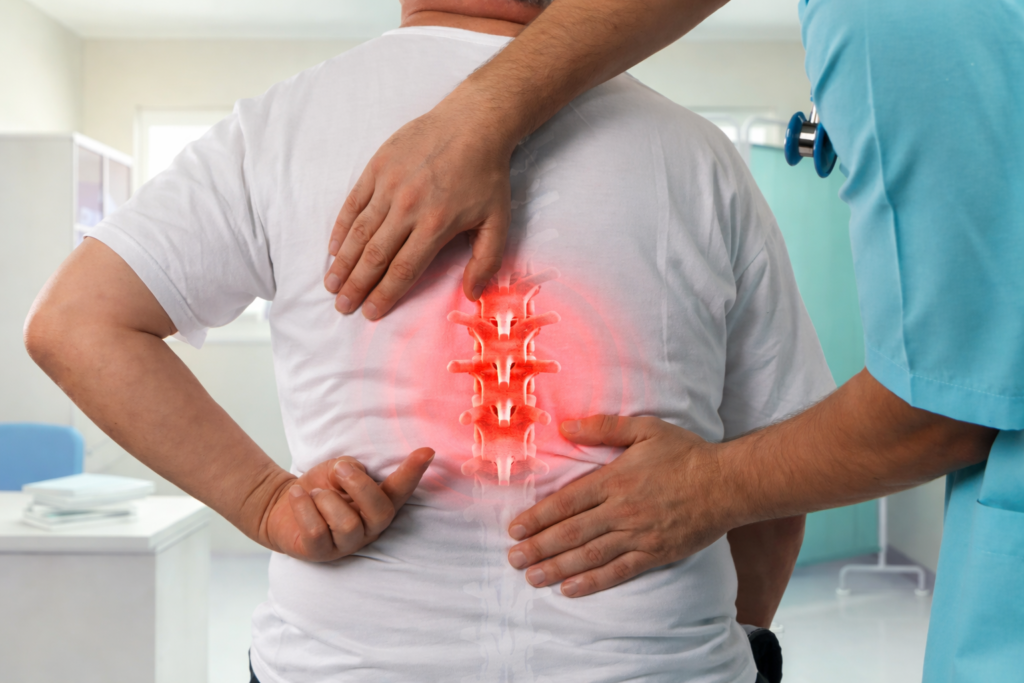
Pain Management - Selective Nerve Root Block/Epidural Block/Facet Block
Pain alleviation techniques such as Selective Nerve Root Block, Epidural Block, and Facet Block comprise sophisticated noninvasive therapies aimed at alleviating discomfort related to the spine. These minimally intrusive injections contribute to mitigating inflammation, obstructing pain signals, and enhancing mobility, all without the necessity of surgical intervention.
These methods are frequently employed for individuals enduring chronic back pain, neck pain, and nerve-related disorders, particularly when traditional medications and physiotherapy fail to yield adequate relief.
Types of Pain Alleviation Techniques
Selective Nerve Root Block (SNRB): This technique addresses a particular nerve root responsible for discomfort. It serves both as a diagnostic measure and a therapeutic approach, assisting in pinpointing the origin of pain while providing relief.
Epidural Block:
An epidural injection administers medication into the area surrounding the spinal cord to alleviate inflammation and ease pain stemming from conditions such as a herniated disc or spinal stenosis.
Facet Block:
Facet joint injections target pain originating from the tiny joints within the spine, aiding in reducing stiffness and unease in the back or neck.
Conditions Managed
These techniques are effective for governing:
- Sciatica and nerve discomfort
- Herniated or slipped disc
- Lumbar and cervical spondylosis
- Spinal stenosis
- Chronic back and neck discomfort
- Facet joint arthritis
They are frequently recommended as components of a holistic pain management strategy.
Pain Relief
Advantages of Pain Alleviation Injections
Non-invasive and minimally intrusive
Swift procedure with brief downtime
Immediate or short-lived pain relief
Assists in evading or postponing surgery
Enhances mobility and overall quality of life
Most procedures are conducted in an outpatient setting, enabling patients to return home on the same day.
Pain Relief
Advantages of Pain Alleviation Injections
Non-invasive and minimally intrusive
Swift procedure with brief downtime
Immediate or short-lived pain relief
Assists in evading or postponing surgery
Enhances mobility and overall quality of life
Most procedures are conducted in an outpatient setting, enabling patients to return home on the same day.
Procedure & Recovery
These injections are administered under imaging guidance (such as fluoroscopy) to guarantee precision and safety. The procedure generally takes a limited duration, allowing patients to resume light activities within a day.
The length of pain relief may differ based on the condition and individual response. In certain instances, repeated injections may be suggested for long-term management.
Procedure & Recovery
These injections are administered under imaging guidance (such as fluoroscopy) to guarantee precision and safety. The procedure generally takes a limited duration, allowing patients to resume light activities within a day.
The length of pain relief may differ based on the condition and individual response. In certain instances, repeated injections may be suggested for long-term management.

Expert Spine Care
Pain alleviation techniques necessitate accuracy and expertise for effective outcomes. An appropriate diagnosis and individualized strategy are critical to addressing the exact source of pain.
If you are grappling with ongoing back or nerve pain, consult a spine specialist to investigate safe, non-invasive treatment alternatives.
Frequently Asked Questions
you should see a spine surgeon if your back pain doesn't improve with conservative treatment measures, gets worse, interferes with normal activity, or is associated with other symptoms such as leg pain, numbness, tingling, or weakness The spine surgeon can help determine the cause of your back pain and discuss treatment options, including surgical and non-surgical options.
No, spine surgery is not mandatory in all cases. A lot of symptoms of back pain and slipped disc can be reduced by medication, physiotherapy, exercising and other non-surgical treatments. Moreover, surgery can be recommended only if the pain is excruciating or if it is causing extreme discomfort due to pressure on the nerves.
Final recovery is defined based on the nature of the surgery, the spinal problem, and the general condition of the body. Some patients may resume most routine activities after several days or weeks. However, in most cases, it takes between several weeks and a few months for the body to heal entirely. The spine surgeon will advise the expected duration of the recovery period following the surgical procedure.
If you are looking for a Best Spine Surgeon in Noida, here is contact information Dr. Pramod Saini, Endoscopic and Minimally Invasive Spine Surgeon at Max Super Speciality Hospital (Jaypee Hospital), Sector 128, Noida. He specialises in treatment of slipped disc, sciatica, spinal stenosis and various other spine disorders. Consultation offers treatment options including surgery and non-surgical options and surgery is considered only if there are no other options. For consultation, contact Spine Surgery Noida , or reach out to the hospital directly for information about appointments.